Buy datatube.eu ?
We are moving the project
datatube.eu .
Are you interested in purchasing the domain
datatube.eu ?
domain@kv-gmbh.de · 0541-91531010
Buy datatube.eu ?
What is faster, SN1 or SN2?
SN2 reactions are generally faster than SN1 reactions. This is because SN2 reactions involve a single step where the nucleophile attacks the substrate at the same time the leaving group leaves, leading to a concerted mechanism. In contrast, SN1 reactions proceed through a two-step mechanism involving the formation of a carbocation intermediate, which can be a slower step. Additionally, the rate of SN2 reactions is dependent on the concentration of both the substrate and the nucleophile, while the rate of SN1 reactions is only dependent on the concentration of the substrate. **
Which reaction, SN1 or SN2, occurs in secondary halogen cycloalkanes?
In secondary halogen cycloalkanes, the SN1 reaction is more likely to occur. This is because the SN1 reaction involves a two-step process where the leaving group leaves first, forming a carbocation intermediate, and then the nucleophile attacks. The stability of the carbocation intermediate is important, and in secondary halogen cycloalkanes, the carbocation intermediate is more stable due to the presence of the neighboring alkyl groups. This makes the SN1 reaction more favorable in secondary halogen cycloalkanes compared to the SN2 reaction. **


Similar search terms for SN2
Top-Angebote
Products related to SN2:
-
HARPERCOLLINS Creative Confidence by Tom & David Kelley – Unleashing Your Creative Potential & Innovation MindsetA powerful and inspiring book from the founders of IDEO, the award-winning design firm, on unleashing the creativity that lies within each and every one of us. Too often, companies and individuals assume that creativity and innovation are the domain of the ‘creative types’. But two of the foremost experts in innovation, design and creativity on the planet show us that each and every one of us is creative. In an entertaining and inspiring narrative that draws on countless stories from their work at IDEO, and with many of the world's top companies and design firms, David and Tom Kelley identify the principles and strategies that will allow us to tap into our creative potential in our work lives, and in our personal lives, allow us to think outside the box in terms of how we approach and solve problems. ‘Creative Confidence’ is a book that will help each of us be more productive and successful in our lives and in our careers.4,95 £*Shipping: 1,99 £Secure redirect to the provider
-
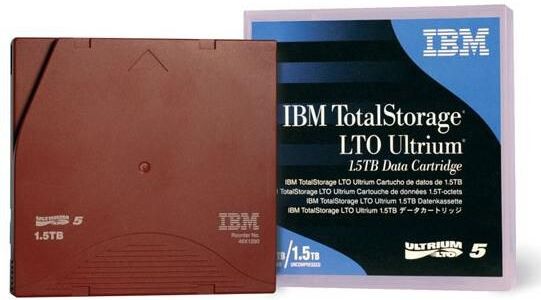
HP Ultrium 6 LTO Data Cartridge PurpleLTO Ultrium 6 data cartridge with 6.25 TB compressed capacity and 846 m tape length, featuring Metal Particle technology for reliable long-term data storage. Compatible with HP StoreEver and MSL library systems. Includes write-on labels and comes with a limited lifetime warranty.66,49 £*Shipping: 0,00 £Secure redirect to the provider



-
Which type of nucleophilic substitution is known as SN1 or SN2?
The type of nucleophilic substitution known as SN1 or SN2 is SN1 (Substitution Nucleophilic Unimolecular) and SN2 (Substitution Nucleophilic Bimolecular). SN1 reactions proceed through a two-step mechanism involving the formation of a carbocation intermediate, while SN2 reactions occur in a single step with simultaneous bond formation and bond breaking. The choice between SN1 and SN2 mechanisms depends on factors such as the nature of the substrate, nucleophile, and solvent. **
-
What is the question about the SN1 and SN2 reactions in chemistry?
The question about SN1 and SN2 reactions in chemistry typically revolves around the differences between these two types of nucleophilic substitution reactions. Students may be asked to compare the reaction mechanisms, the role of the solvent, the stereochemistry of the products, and the factors that influence the reaction rate. Additionally, they may be asked to predict the major products of a given reaction based on the reaction conditions and the nature of the substrate. **
-
Is the synthesis of 1-bromopropane in the laboratory an SN1 or SN2 mechanism?
The synthesis of 1-bromopropane in the laboratory typically follows an SN2 (nucleophilic substitution bimolecular) mechanism. In this mechanism, the nucleophile directly attacks the substrate, displacing the leaving group in a single step. This is favored for primary alkyl halides like 1-bromopropane due to the absence of steric hindrance. SN1 (nucleophilic substitution unimolecular) mechanisms are more common for tertiary alkyl halides where the carbocation intermediate is stabilized by surrounding alkyl groups. **
-
According to which mechanism do the two molecules react: SN1, SN2, E1, or E2?
The mechanism by which two molecules react depends on the specific reaction conditions and the nature of the reactants. If the reaction involves a nucleophile attacking a substrate and forming a carbocation intermediate, it is likely to proceed via an SN1 mechanism. On the other hand, if the reaction involves a nucleophile directly displacing a leaving group in a single step, it is more likely to proceed via an SN2 mechanism. E1 and E2 mechanisms involve the elimination of a leaving group to form a double bond, with E1 involving the formation of a carbocation intermediate and E2 occurring in a single step with the nucleophile acting as a base. **

When does nucleophilic substitution occur via the SN1 and when via the SN2 mechanism?
Nucleophilic substitution occurs via the SN1 mechanism when the substrate is a tertiary or secondary alkyl halide, as the carbocation intermediate formed in the reaction is stabilized by the surrounding alkyl groups. On the other hand, nucleophilic substitution occurs via the SN2 mechanism when the substrate is a primary or methyl alkyl halide, as the backside attack of the nucleophile on the substrate occurs simultaneously with the departure of the leaving group. The choice between SN1 and SN2 mechanisms depends on the nature of the substrate and the reaction conditions. **
How do you calculate the proportion of reactions after SN1 and SN2 when 2-bromobutane reacts with hydroxide ions under specific reaction conditions and yields 40% via SN1 and 60% via SN2?
To calculate the proportion of reactions after SN1 and SN2 when 2-bromobutane reacts with hydroxide ions, you would first determine the total number of reactions, which in this case is 100%. Then, you would use the given percentages to calculate the proportion of each reaction pathway. In this scenario, since 40% of the reactions yield via SN1 and 60% via SN2, you would have 40% SN1 and 60% SN2. This means that out of every 100 reactions, 40 would proceed via SN1 and 60 would proceed via SN2. **
Top-Angebote
Products related to SN2:
-
EaseUS Data Recovery Wizard 18 ProEaseUS Partition Master 18.0 Professional is a powerful and versatile tool for partition management on Windows systems. Designed for home and professional users, this software offers a range of advanced features to optimise hard disk usage and improve system performance. Key Features Complete Partition Management: Create, resize, move, merge, delete and hide partitions with ease. EaseUS Partition Master allows you to manage partitions without data loss, ensuring a smooth and secure experience. Disk Cloning: Clone entire disks or individual partitions to easily transfer data from one drive to another. This function is especially useful when upgrading to new hard disks or SSDs. Partition Recovery: Recovers partitions lost or damaged as a result of accidental deletions, Windows upgrades or virus attacks. The recovery function is quick and easy, allowing data to be restored in just a few clicks. Performance Optimisation: Supports 4K alignment of SSD partitions to improve read and write performance, ensuring your system performs at its best. Advanced Conversion: Convert disks and partitions between MBR and GPT without formatting, making it easy to upgrade to Windows 11 and manage large disks. File System Check and Repair: Quickly checks the file system for errors and bad sectors, restoring disk functionality efficiently. Bootable Media Creation: Create WinPE bootable media to solve system boot problems or perform partition management tasks without booting Windows. Intuitive Interface: The user interface is designed to be simple and intuitive, making access to all features easy even for novice users. Why Choose EaseUS Partition Master 18.0 Professional? EaseUS Partition Master 18.0 Professional stands out for its combination of advanced functionality and ease of use. It is an ideal solution for anyone who wants to manage their disks effectively, whether they are home users or IT professionals. Competitively priced and with free updates for life, it is an excellent investment for optimising data management. Choose EaseUS Partition Master 18.0 Professional for stress-free partition management and to ensure that your system is always running at peak capacity. Don't let disk management become a hassle; trust EaseUS for a complete and reliable solution.55,90 £*Shipping: 0,00 £Secure redirect to the provider
-
HARPERCOLLINS Creative Confidence by Tom & David Kelley – Unleashing Your Creative Potential & Innovation MindsetA powerful and inspiring book from the founders of IDEO, the award-winning design firm, on unleashing the creativity that lies within each and every one of us. Too often, companies and individuals assume that creativity and innovation are the domain of the ‘creative types’. But two of the foremost experts in innovation, design and creativity on the planet show us that each and every one of us is creative. In an entertaining and inspiring narrative that draws on countless stories from their work at IDEO, and with many of the world's top companies and design firms, David and Tom Kelley identify the principles and strategies that will allow us to tap into our creative potential in our work lives, and in our personal lives, allow us to think outside the box in terms of how we approach and solve problems. ‘Creative Confidence’ is a book that will help each of us be more productive and successful in our lives and in our careers.4,95 £*Shipping: 1,99 £Secure redirect to the provider
-
HP Ultrium 6 LTO Data Cartridge PurpleLTO Ultrium 6 data cartridge with 6.25 TB compressed capacity and 846 m tape length, featuring Metal Particle technology for reliable long-term data storage. Compatible with HP StoreEver and MSL library systems. Includes write-on labels and comes with a limited lifetime warranty.66,49 £*Shipping: 0,00 £Secure redirect to the provider
-
What is faster, SN1 or SN2?
SN2 reactions are generally faster than SN1 reactions. This is because SN2 reactions involve a single step where the nucleophile attacks the substrate at the same time the leaving group leaves, leading to a concerted mechanism. In contrast, SN1 reactions proceed through a two-step mechanism involving the formation of a carbocation intermediate, which can be a slower step. Additionally, the rate of SN2 reactions is dependent on the concentration of both the substrate and the nucleophile, while the rate of SN1 reactions is only dependent on the concentration of the substrate. **
-
Which reaction, SN1 or SN2, occurs in secondary halogen cycloalkanes?
In secondary halogen cycloalkanes, the SN1 reaction is more likely to occur. This is because the SN1 reaction involves a two-step process where the leaving group leaves first, forming a carbocation intermediate, and then the nucleophile attacks. The stability of the carbocation intermediate is important, and in secondary halogen cycloalkanes, the carbocation intermediate is more stable due to the presence of the neighboring alkyl groups. This makes the SN1 reaction more favorable in secondary halogen cycloalkanes compared to the SN2 reaction. **
-
Which type of nucleophilic substitution is known as SN1 or SN2?
The type of nucleophilic substitution known as SN1 or SN2 is SN1 (Substitution Nucleophilic Unimolecular) and SN2 (Substitution Nucleophilic Bimolecular). SN1 reactions proceed through a two-step mechanism involving the formation of a carbocation intermediate, while SN2 reactions occur in a single step with simultaneous bond formation and bond breaking. The choice between SN1 and SN2 mechanisms depends on factors such as the nature of the substrate, nucleophile, and solvent. **
-
What is the question about the SN1 and SN2 reactions in chemistry?
The question about SN1 and SN2 reactions in chemistry typically revolves around the differences between these two types of nucleophilic substitution reactions. Students may be asked to compare the reaction mechanisms, the role of the solvent, the stereochemistry of the products, and the factors that influence the reaction rate. Additionally, they may be asked to predict the major products of a given reaction based on the reaction conditions and the nature of the substrate. **
Similar search terms for SN2
-
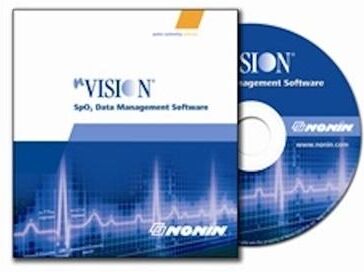
Nonin Medical nVision Data Management Software for Oximetry Screening""" nVision SpO2 Data Management Software Nonin's innovation in pulse oximetry has led to the development of an easy oximetry reporting solution nVISION. Designed to provide effortless viewing, professional analysis, report generation and reliable..."441,00 $*Shipping: 0,00 $Secure redirect to the provider
-
Is the synthesis of 1-bromopropane in the laboratory an SN1 or SN2 mechanism?
The synthesis of 1-bromopropane in the laboratory typically follows an SN2 (nucleophilic substitution bimolecular) mechanism. In this mechanism, the nucleophile directly attacks the substrate, displacing the leaving group in a single step. This is favored for primary alkyl halides like 1-bromopropane due to the absence of steric hindrance. SN1 (nucleophilic substitution unimolecular) mechanisms are more common for tertiary alkyl halides where the carbocation intermediate is stabilized by surrounding alkyl groups. **
-
According to which mechanism do the two molecules react: SN1, SN2, E1, or E2?
The mechanism by which two molecules react depends on the specific reaction conditions and the nature of the reactants. If the reaction involves a nucleophile attacking a substrate and forming a carbocation intermediate, it is likely to proceed via an SN1 mechanism. On the other hand, if the reaction involves a nucleophile directly displacing a leaving group in a single step, it is more likely to proceed via an SN2 mechanism. E1 and E2 mechanisms involve the elimination of a leaving group to form a double bond, with E1 involving the formation of a carbocation intermediate and E2 occurring in a single step with the nucleophile acting as a base. **
-
When does nucleophilic substitution occur via the SN1 and when via the SN2 mechanism?
Nucleophilic substitution occurs via the SN1 mechanism when the substrate is a tertiary or secondary alkyl halide, as the carbocation intermediate formed in the reaction is stabilized by the surrounding alkyl groups. On the other hand, nucleophilic substitution occurs via the SN2 mechanism when the substrate is a primary or methyl alkyl halide, as the backside attack of the nucleophile on the substrate occurs simultaneously with the departure of the leaving group. The choice between SN1 and SN2 mechanisms depends on the nature of the substrate and the reaction conditions. **
-
How do you calculate the proportion of reactions after SN1 and SN2 when 2-bromobutane reacts with hydroxide ions under specific reaction conditions and yields 40% via SN1 and 60% via SN2?
To calculate the proportion of reactions after SN1 and SN2 when 2-bromobutane reacts with hydroxide ions, you would first determine the total number of reactions, which in this case is 100%. Then, you would use the given percentages to calculate the proportion of each reaction pathway. In this scenario, since 40% of the reactions yield via SN1 and 60% via SN2, you would have 40% SN1 and 60% SN2. This means that out of every 100 reactions, 40 would proceed via SN1 and 60 would proceed via SN2. **
* All prices are inclusive of VAT and, if applicable, plus shipping costs. The offer information is based on the details provided by the respective shop and is updated through automated processes. Real-time updates do not occur, so deviations can occur in individual cases. ** Note: Parts of this content were created by AI.